Repotting houseplants is an essential part of plant care that promotes healthy growth, prevents root crowding, replenishes depleted nutrients, and replenishes depleted nutrients. While many plant owners hesitate to repot due to fear of damaging their plant, the process is simple with the right approach. This guide will take you through everything you need to know about repotting houseplants, from recognizing when it’s time to repot to post-repotting care.
Why Repotting is Essential for Plant Health
Over time, houseplants outgrow their containers, leading to root crowding, poor soil conditions, and restricted nutrient uptake. Regular repotting ensures:
- Stronger root development
- Enhanced nutrient absorption
- Improved moisture retention
- Gives your plant room to grow
If your plant is struggling despite proper care, repotting could be the key to reviving its vitality.
Signs Your Plant Needs Repotting
If your plant is showing the signs below, it’s important to check if the plant is root bound.
1. Roots Growing Through Drainage Holes
If you notice roots poking out from the drainage holes, it’s a clear sign your plant may have outgrown its container and needs more space.
2. Slower Growth Than Normal
A plant that suddenly stops growing, despite receiving adequate sunlight, water, and nutrients, may be root-bound and require a new pot.
3. Frequent Watering Needs
When soil dries out rapidly after watering, it indicates that the roots have eaten up most of the soil and there is not enough soil left for moisture retention.
4. Visible Salt Buildup
A white, crusty layer on the soil surface suggests excessive fertilizer salts, which can harm plant roots. Repotting with fresh soil helps restore balance.
5. Plant Becoming Top-Heavy
If your plant is leaning or frequently toppling over, it’s likely root-bound and needs a larger pot to support its growth. Check if your plant is root bound and needs a larger pot.
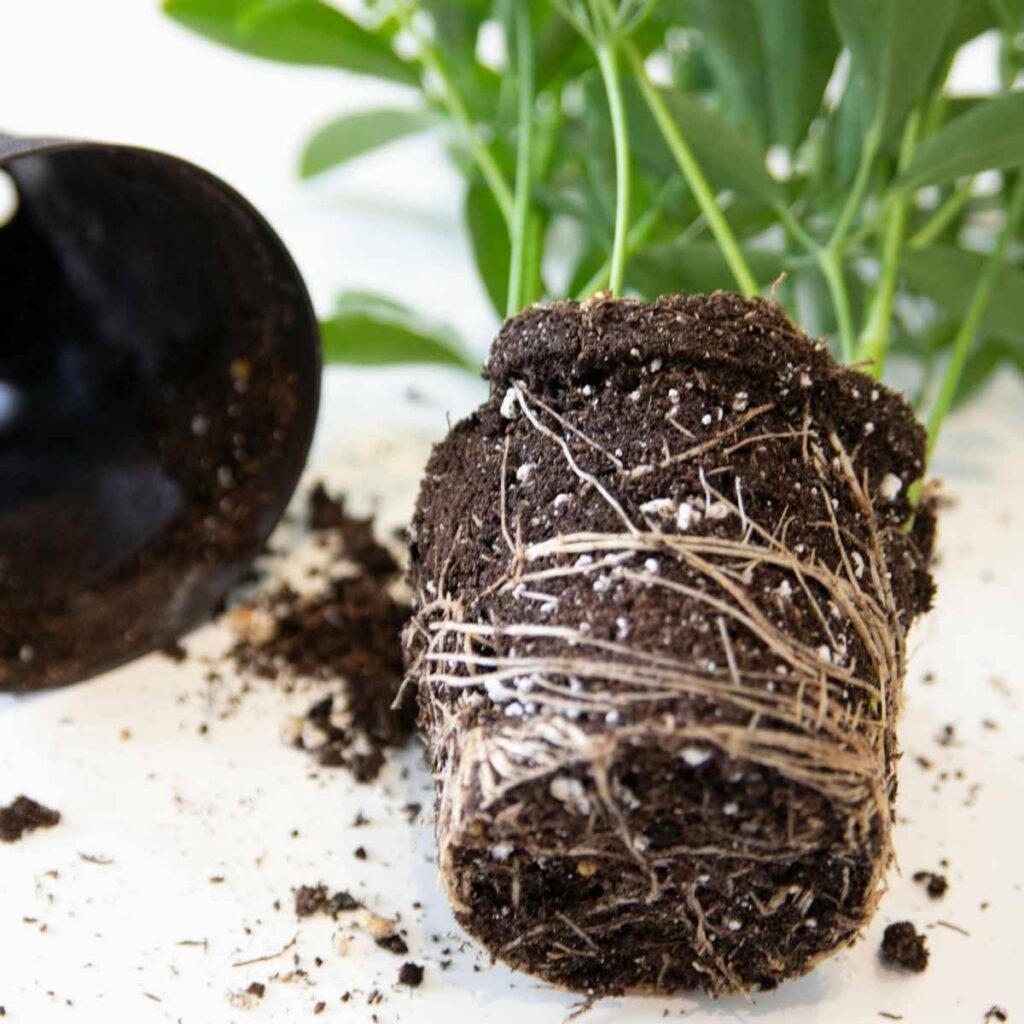
6. The Plant is Root Bound
When you remove the plant from its existing pot, the roots are going around the pot in circles forming the shape of the pot. And therefore have no more room to grow.
What is the Best Time to Repot?
When Should You Repot?
The ideal time to repot houseplants is during their active growing season, typically spring and early summer. This allows them to recover quickly and establish new roots in fresh soil.
How Often Should You Repot?
The type of plant and the lighting conditions impact how fast the plant is growing and how often it needs to be repotted. It’s important to not repot an indoor plant unless it needs to be repotted.
Essential Tools and Materials Needed
1. Container Selection Guide
- Choose a pot 1-2 inches larger in diameter than the current one.
- Ensure it has drainage holes to prevent waterlogging. We recommend using plastic nursery pots as they will have more drainage holes.
2. Potting Mix Requirements
- It’s important to check the type of plant you have and the type of soil your plant needs. Some plants will require a soil that drains well. Others may require a soil mixture that retains moisture.
- You’ll want to use an indoor potting soil mix that has been stored indoors to prevent bugs.
3. Additional Tools Checklist
- Trowel or small shovel
- Pruning shears
- Gloves
Step-by-Step Repotting Process
1. Removing the Plant
- Gently tip the pot sideways and tap it to loosen the soil.
- While the plant is still on its side carefully slide the plant out, avoiding unnecessary root damage.
2. Root Care and Preparation
- Remove excess soil from the roots.
- Trim any dead or rotting roots with sterilized pruning shears.
- Gently tease them apart to encourage outward growth.
3. Preparing the New Pot
- Place a layer of fresh potting mix at the bottom, it should only be about half an inch to one inch thick. One to two inches for larger plants.
- Ensure proper depth, so the plant sits at the same level as in the old pot.
4. Transplanting Process
- Position the plant in the center of the new pot.
- Fill in gaps with fresh soil, pressing down on the sides to remove air pockets. If it’s a large plant, you’ll need a chopstick or a long stick that will reach all the way down on the sides to push out any air pockets.
- Leave about an inch of space at the top to prevent overflow during watering.
5. Post-Repotting Care
- It’s helpful to repot your plant when the soil is fully dry so you are able to water it after repotting. If your soil is not dry when you repot the plant, and there is still moist soil when you repot it, you’ll want to wait for that soil to dry before watering your plant for the first time.
- Even though your plant is in a larger pot, it still has the same amount of roots. Overwatering a plant after it’s been repotted is one reason plants can die after a repot. For the first month after your repot, give the plant the same amount of water you were giving it before you repotted it.
Common Mistakes to Avoid When Repotting
- Choosing a pot too large, leading to overwatering risks.
- Repotting during dormancy, causing stress.
- Overwatering the plant immediately after repot.
- Watering immediately if the plant doesn’t need it.
Special Considerations for Different Plant Types
- Succulents & Cacti: Use succulent or cactus soil
- Tropical Plants: Provide humidity and indirect light post-repotting.
- Orchids: Use a bark-based mix or sphagnum moss.
Aftercare Tips
1. Watering Schedule Adjustments
- Reduce watering immediately after repotting.
- Resume regular watering once the plant shows new growth.
2. Environmental Considerations
- Keep plants in a stable environment, away from direct sun or cold drafts. If the plant was thriving in the area you originally had it, avoid moving it as it will cause more stress for the plant.
3. Monitoring Plant Health
- Watch for signs of transplant shock like drooping leaves and adjust care accordingly.
- If yellowing occurs, check for overwatering or poor drainage.
FAQs
How often should I repot my houseplants?
Most houseplants should be repotted every 1-3 years, depending on their growth rate and condition.
Can I reuse old potting soil when repotting?
Reusing soil is not recommended as it may be depleted of nutrients and contain pests or diseases. If necessary, refresh it with compost or perlite.
What size pot should I choose when repotting?
Select a pot 1-2 inches larger than the current one to allow room for growth without retaining excess moisture.
Should I fertilize my plant right after repotting?
No, wait at least 2-4 weeks before fertilizing to allow roots to settle.
Why Folha Oasis?
At Folha Oasis, we’re passionate about helping you create your ideal indoor sanctuary. Our curated selection of plants caters to every skill level, lifestyle, and aesthetic preference. We’re not just about selling plants—we provide expert advice, personalized recommendations, and ongoing support to help you succeed in your indoor gardening journey.
Ready to transform your space? Book a consultation with our indoor plant specialists today.