Calatheas at a glance
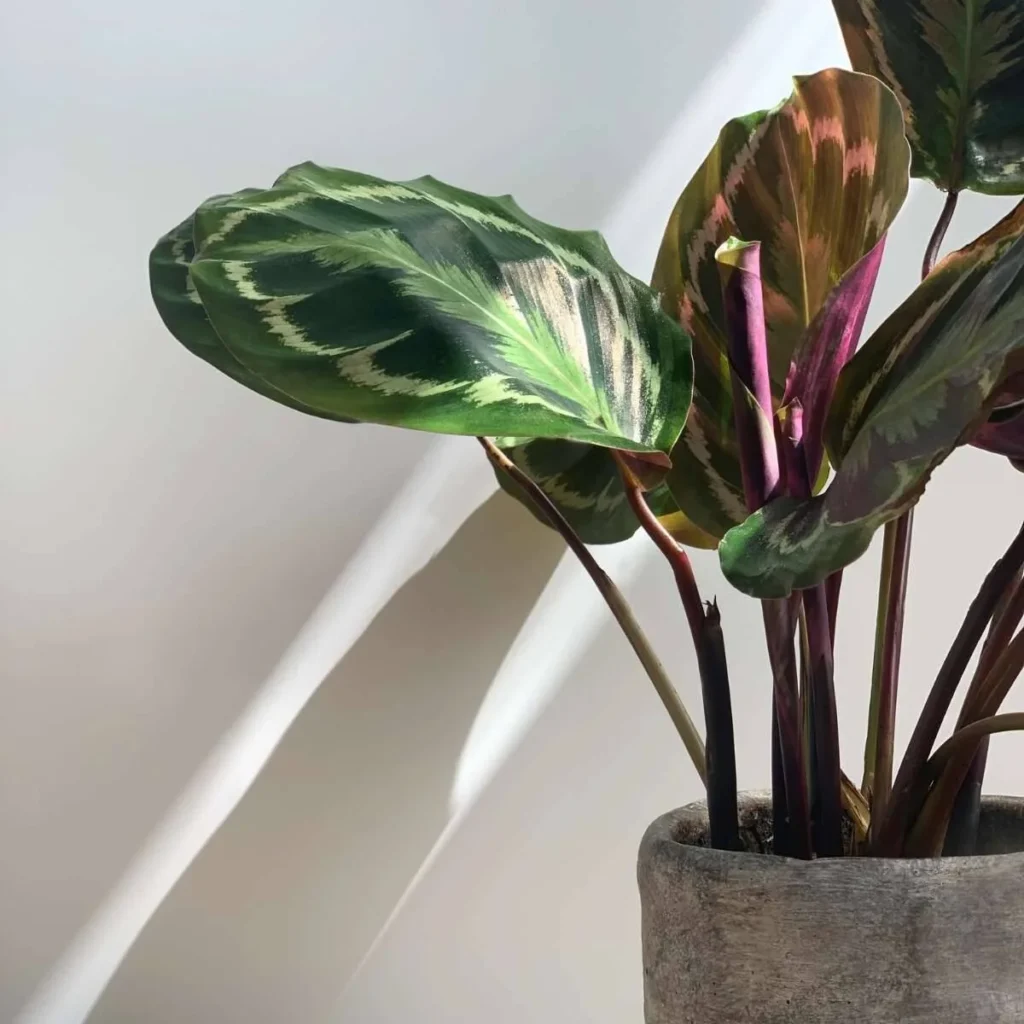
Calatheas are more commonly referred to as ‘prayer plants’ because of the way their leaves curl a bit at night time and widen in the morning with the sun. With leaves that come in a variety of vibrant colors, calatheas are a great way to add some “pop” to a room.
Native to the tropical environments, Calatheas tend to thrive in high humidity. They come in a variety of shapes, sizes and colors but most have distinct reddish colors on the underside of their leaves.
Calatheas thrive in medium to bright indirect sunlight and do need regular watering. Be sure to let the top inch or two of the soil to dry between waterings.
Also known as: Calathea, Peacock Plant, Zebra Plant
Family: Marantaceae
Origin: Brazil and Central America
Care Instructions
Calatheas tend to need a little more attention than some indoor houseplants.
Light: Bright indirect light, but avoid direct sunlight.
Temperature: Average to warm (70-85 °F)
Fertilizer: From spring through summer you’ll want to use a high-nitrogen foliage plant fertilizer every 3 weeks or so. In fall and winter, feed monthly.
Water: Try to always keep the soil lightly moist and keep the plant in a high humidity environment. Always use filtered water and let the top inch or so of soil to dry between waterings.
Repotting: Repot yearly in the spring.
Longevity: Calatheas tend to live between 5 – 8 years.
Troubleshooting Tips
Here are a few things to watch out for with your Calathea and potential causes.
Leaf edges and tips are turning brown.
Cause: Unfiltered water, too much fertilizer or low humidity
Remedy: First and foremost, Calathea do sometimes develop a few burned leaves as they acclimate to their new home, this is normal. If you’ve had your calathea for some time now though, make sure you’re using filtered water (this is a good best practices for all plants). It could also be too much fertilizer or a low humidity environment.
Leaves are yellowish and speckled with stick undersides.
Cause: Spider mites
Remedy: Immediately isolate the plant. Calathea can be prey to spider mites if high humidity isn’t maintained. You’ll want to detect this early on and you can try a systemic pesticide.
Cottony creatures on leaves or stems.
Cause: Mealybugs
Remedy: Quarantine the plant and remove the mealybugs with tweezers or cotton swabs dipped in alcohol. Repeat this every couple of days until the mealybugs are gone.